
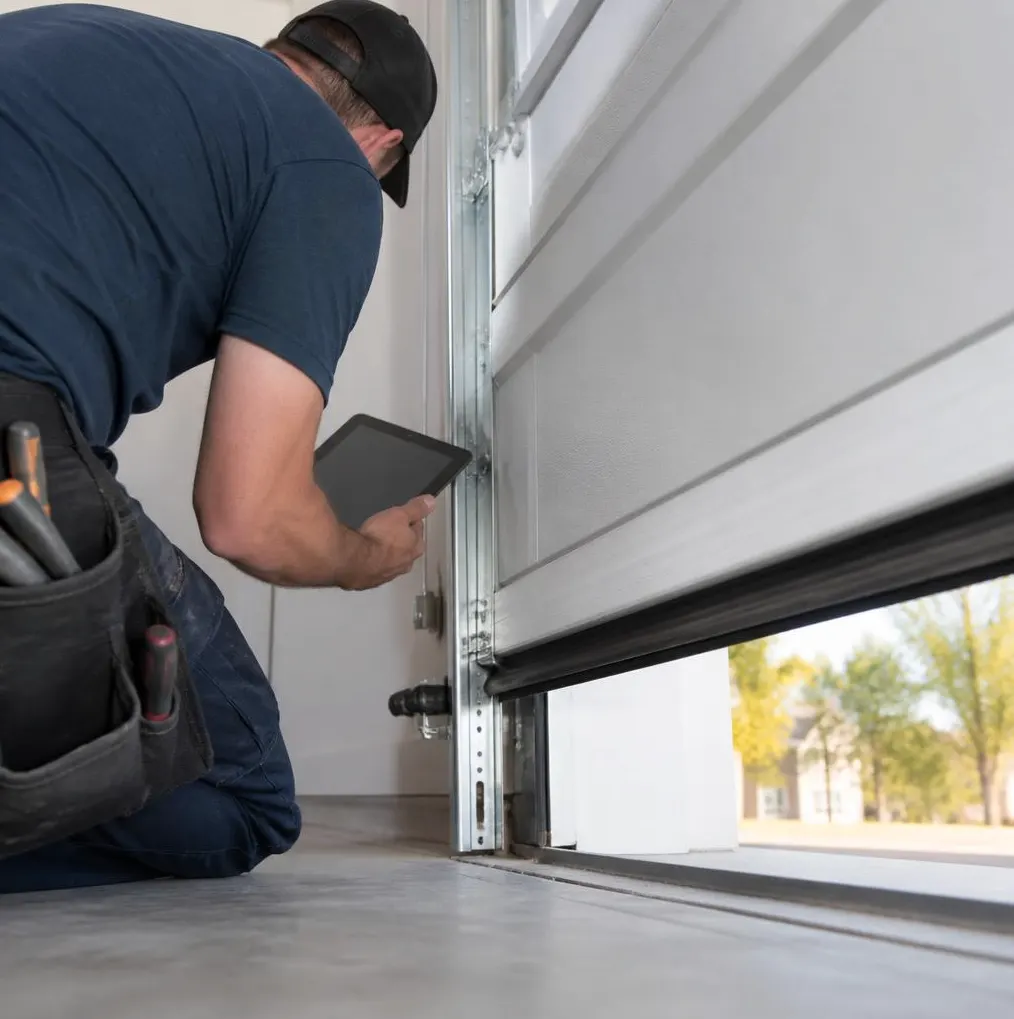
What a Skipped Season Actually Costs You
Put this off through another season and the bill usually isn't small. A door that's been grinding along a dry track all summer will seize up the first morning it drops below freezing. Hardware that's been quietly working loose through months of temperature swings can let a panel sag just enough to throw off the whole system. And once road salt and ice melt have had a full winter to eat at your tracks and rollers, you're not looking at a tune-up anymore — you're looking at parts replacement. Twenty minutes, once a season, is what stands between a quick check and a Saturday morning spent waiting for a service call because the door won't budge.
Tools You'll Need
- Flashlight or headlamp
- Step stool
- Socket wrench and screwdriver set
- Garage-door-specific lubricant (silicone or lithium-based — not WD-40, which attracts dust and grime)
- Clean rag
- A broom handle or cardboard box (for the safety reverse test)
The Twenty-Minute Routine
- Walk the tracks with a flashlight. Look for dents, rust, or a buildup of road salt residue tracked in from the driveway. Humid summers followed by salty winters do a number on exposed metal here, so this is worth checking every season, not just in fall.
- Tighten visible hardware. Go panel by panel and snug up the bolts on the hinges and roller brackets. Big seasonal temperature swings expand and contract metal and wood, and that constant flex loosens fasteners over time. A quarter-turn on a dozen bolts is normal; if something spins freely and won't catch, stop — that's a sign the hole has stripped and it's time for a technician.
- Lubricate the moving parts. A light coat of garage-door lubricant on the rollers, hinges, and the track itself (not the opener chain or belt — that's a different product) keeps things moving quietly and resists the grime that spring storm season tracks in. Wipe off any excess so it doesn't collect dust.
- Check the weatherstripping along the bottom and sides. Look for cracking, gaps, or spots where it's pulled away from the door. This is your main defense against wind-driven rain during storm season and against cold air during a McHenry winter. If it's brittle or torn, it's a simple homeowner swap with a strip from a hardware store.
- Test the photo-eye sensors. Wipe the small lenses near the bottom of each track with a clean, dry rag — cobwebs and dust are common culprits for a door that refuses to close for no obvious reason.
- Run the auto-reverse safety test. Lay a broom handle or cardboard box in the door's path and close it. The door should reverse immediately on contact. If it doesn't, stop using the opener until this is fixed — this is a safety issue, not a maintenance detail.
- Look (don't touch) at the cables and pulleys. Check for fraying, rust, or visible slack. These are under heavy spring tension and are not a DIY repair — this is purely a visual check to flag a problem early.
- Listen during a full open-close cycle. Grinding, popping, or a door that seems to hesitate partway are all worth noting even if nothing looks obviously wrong. Sound is often the first warning sign before a part actually fails.
Where the Homeowner's Job Ends
Everything above — visual checks, lubrication, tightening accessible hardware, wiping sensors, swapping weatherstripping — is safe and reasonable for a homeowner to handle. What's not: anything involving the torsion springs, the lift cables, or the pulleys. These parts are under enough tension to cause serious injury if they let go while you're working on them, and they're not something to troubleshoot with general hardware-store knowledge. If your visual check turns up fraying, rust, or a spring that looks stretched or uneven, that's the line where this routine ends and a service call begins.
When to Call McHenry Garage Door
If your checkup turns up a cable that looks worn, a spring that's visibly uneven, or a door that's suddenly heavier or louder than it was last season, that's the point to call in a technician rather than keep working on it yourself. Our Preventive Maintenance service covers a full inspection of springs, cables, and hardware beyond what's safe to check from the driveway, and if something does need replacing, our Spring Replacement service gets it done safely and correctly the first time. Catching these issues in the fall means you're not troubleshooting a frozen, seized-up door on the coldest morning of the year.
If your twenty-minute check turns up anything you're not sure about, give McHenry Garage Door a call — we serve McHenry, Crystal Lake, Johnsburg, Woodstock, Lake in the Hills, Spring Grove, Fox Lake, and Wonder Lake, and we're happy to take a look before winter makes a small problem a lot bigger.