
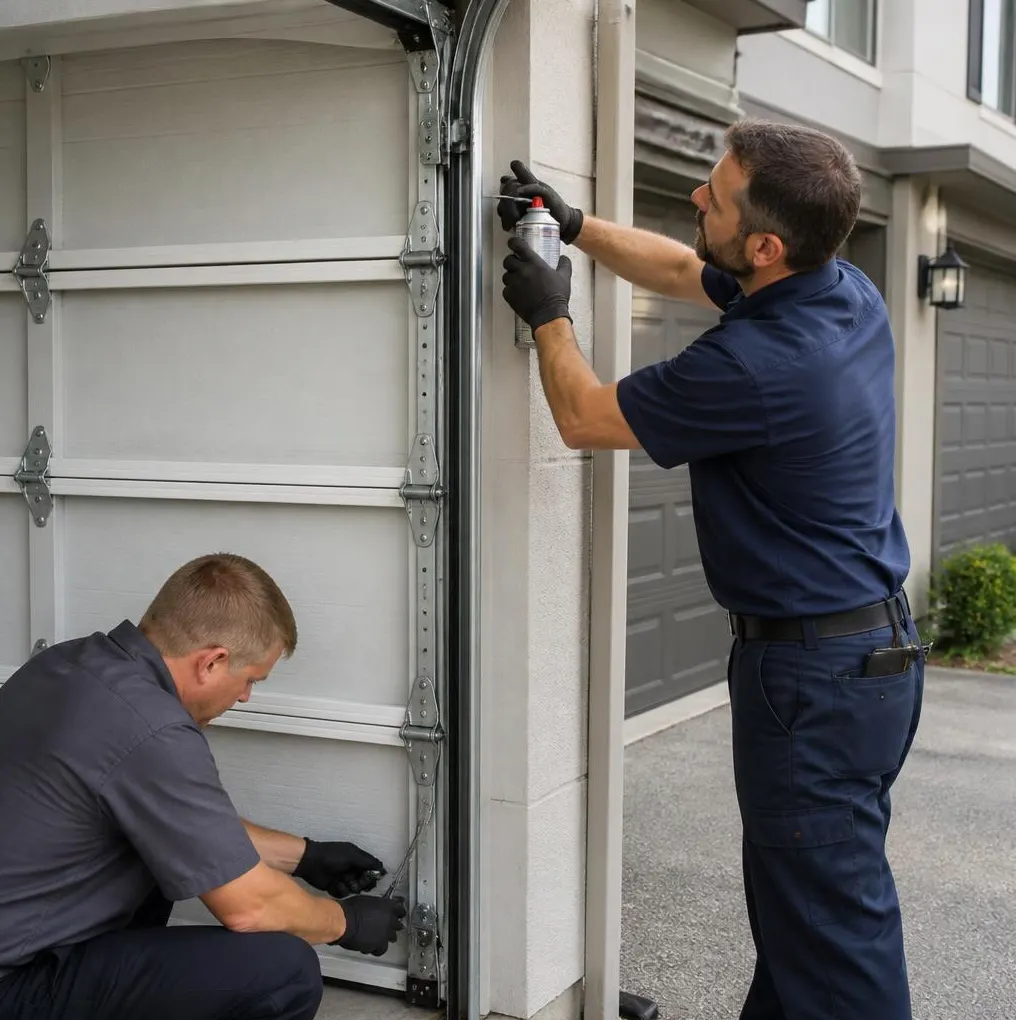
What We See on Service Calls Like This
The call usually starts the same way: "My door won't stay closed" or "the door slams down too hard." When we get there, half the time someone has already been messing with the little dials on the back of the opener. One spouse swears the force needs to be turned up because the door keeps reversing for no reason. The other swears something is broken and the opener needs to be replaced. Most of the time, neither is quite right, and the actual fix has nothing to do with the dials at all. It's a worn roller, a spring that's lost tension, or cold grease on the track slowing the door down just enough to trip the safety sensor.
What Force and Travel Limits Actually Are
These are two separate settings on your opener, and mixing them up is where most of the arguing starts.
- Travel limits tell the opener exactly how far the door should move before stopping — how far down to go before it's "closed," and how far up before it's "open." Set wrong, the door stops short of the floor, reverses before it ever touches down, or bangs into the top of the frame.
- Force tells the opener how much push or pull it's allowed to use to get the door through that travel distance. Set too low, the opener gives up partway and the door stalls or reverses on light resistance. Set too high, the opener will push through almost anything in its path — including a bike, a pet, or a kid's hand.
They work together. Travel limits define the trip, force defines how hard the motor is willing to work to finish it.
Why These Settings Drift in This Climate
Garage door openers in McHenry County deal with a wider temperature swing than most homeowners realize. Cold winters thicken grease on rollers and hinges, which adds resistance the opener has to push through. Ice forms on the bottom of the track or under the door seal, which can make the door stop early or struggle to seat on the floor. Then summer humidity swells wood jambs and weatherstripping, changing how much resistance the door meets at the very end of its travel. None of that is a force or travel limit problem by itself — it's a mechanical change that makes the current settings feel wrong.
That's exactly why the force dial often gets blamed first. The door was working fine in September, then one cold morning in November it starts reversing, and it's tempting to assume the opener needs more muscle. In reality, the door usually just got a little harder to move, and the smart fix is removing that resistance, not telling the motor to fight through it.
The Safety Problem With "Just Turn Up the Force"
Modern openers are required to reverse when they meet resistance — that's not a glitch, it's the safety feature doing its job. If a door is set to reverse the instant it touches a small obstruction, that's intentional. Cranking the force dial up until the door stops reversing doesn't fix anything; it just raises the amount of force needed to trigger the safety stop. At that point the door may close on something — a pet, a stored bike, a kid's foot — without ever reversing at all. If you've ever had to turn the force up more than once to stop reversing, that's a sign something mechanical changed, not that the opener needed more power.
Matching the Symptom to the Setting
It helps to know which problem points to which setting:
- Door reverses a few inches before touching the floor — usually a travel limit set too short, or sometimes ice/debris under the door tripping it early.
- Door creeps slowly, then drops the last few inches hard — travel limit and force are both slightly off, often from a drifting spring.
- Opener strains, grinds, or hesitates on the way up — force may be fine; the real issue is usually a spring losing tension or dry rollers adding resistance.
- Door won't stop pushing even when something is in the way — force is set too high, and this one needs to be corrected immediately for safety.
Fix the Door Before You Touch the Dial
Before adjusting anything on the opener itself, it's worth ruling out the mechanical causes that are common here: lubricate the rollers and hinges with a garage-door-specific lubricant before winter, clear ice or debris from the track and floor seal, and check that the door moves smoothly by hand with the opener disconnected. If the door feels heavy, uneven, or drops fast when disconnected, that's a spring or balance issue — adjusting force or travel limits won't solve it, and pushing more force through an unbalanced door puts extra strain on the opener's gears and the door's tracks.
When to Call McHenry Garage Door
If you've checked the basics and the door still won't hold its settings, or you're not comfortable testing the auto-reverse safety feature yourself, that's when to call us. We handle garage door opener repair and installation for homes throughout McHenry and the surrounding area, and we'll check force, travel limits, balance, and spring tension together so the fix actually holds through the next season change. If this keeps happening every few months, a preventive maintenance visit before winter can catch the drift before it becomes a safety issue or a slammed door.
If your opener settings keep drifting or the door isn't behaving the way it should, call McHenry Garage Door. We serve McHenry and nearby communities, and we'll figure out what's actually going on before anyone touches that dial again.