
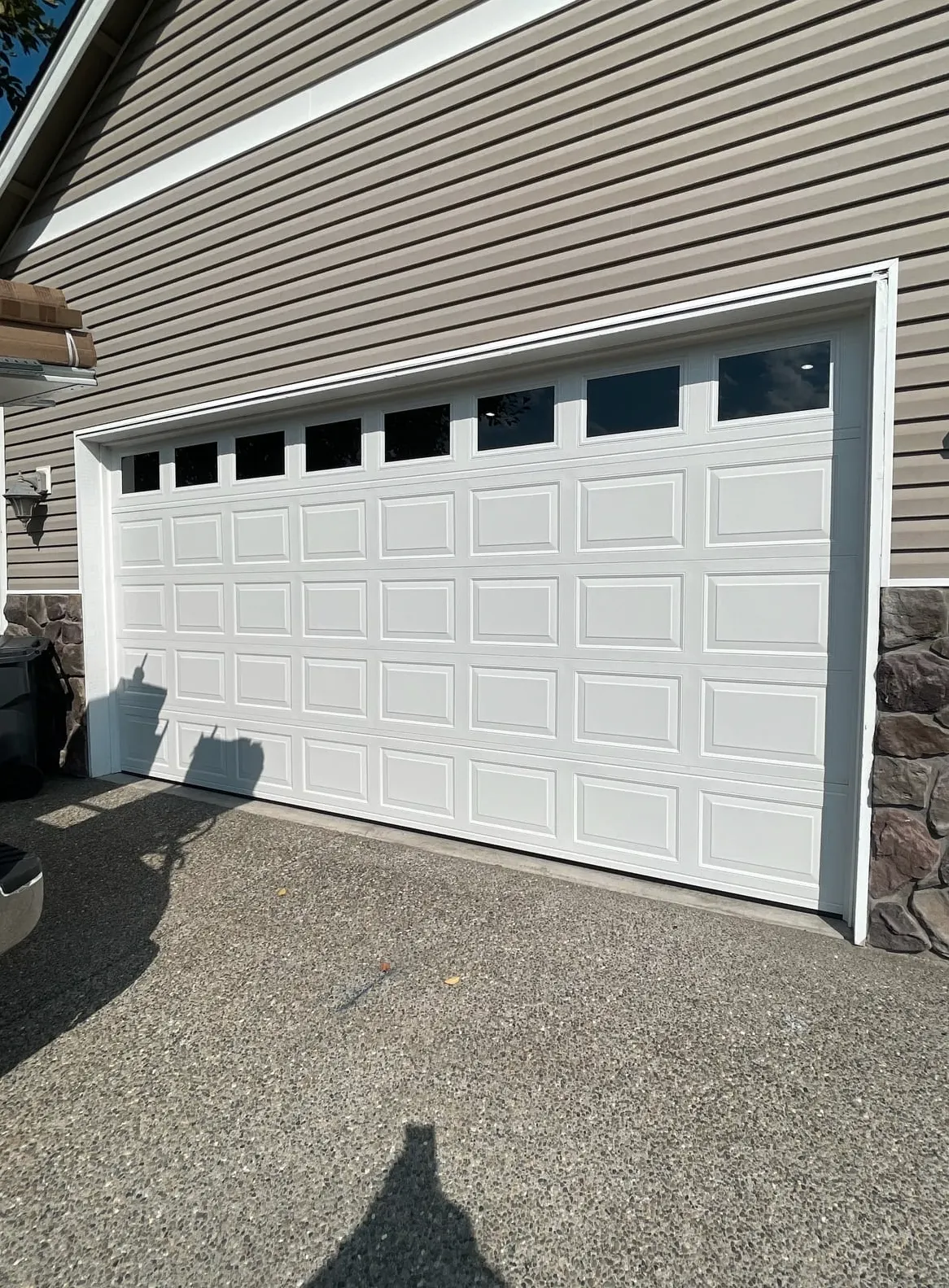
The Short Answer
Home inspectors check that a garage door opens and closes and that the sensors stop it. They rarely check spring sizing, true balance, opener age, or how the door has held up against a McHenry winter. Those are the things that turn into a repair bill in your first year of ownership, so walk the garage yourself before you sign anything.
The Checklist
1. Door age and panel condition
Look for a manufacture date or model sticker on the inside of the door, usually on a top panel. Then check the bottom panel closely, since it takes the brunt of winter salt and slush splashing off tires. Rust bubbling through paint or soft, flaking metal means that panel is weakening and may need replacement sooner than the rest of the door.
2. Springs: type, size, and rust
Most garage doors use one or two torsion springs mounted on a bar above the door, or sometimes extension springs along the tracks. Surface rust on the coils is common and not alarming by itself, but pitting, flat spots, or a spring that looks noticeably smaller in diameter than its neighbor suggests it's undersized for the door or near the end of its cycle life. An undersized or worn spring means the opener is doing work it shouldn't, which shortens the opener's life too.
3. Weatherstripping at the bottom
Press the rubber seal along the bottom edge. If it's cracked, flattened, or missing chunks, cold air, meltwater, and salt spray get into the garage all winter. This is a cheap fix, but it's worth knowing before you move in during late fall.
4. Tracks and rollers
Run a hand along the vertical tracks for rust pitting or bends. Then watch the rollers as someone operates the door: steel rollers without ball bearings are loud and wear fast, while nylon rollers run quieter and usually last longer. Rollers that wobble in the track or look cracked will need replacing before they bind or jump the track.
5. The balance test
This is the one inspectors almost always skip. With the opener disconnected (pull the emergency release), lift the door by hand to waist height and let go. A properly balanced door stays put. If it drops, the springs are too weak for the door's weight; if it shoots up, they're too strong. Either way, the opener is compensating constantly, which wears gears and belts faster than normal use.
6. Opener age and safety sensors
Check the opener's label for a manufacture date. Openers typically last 10 to 15 years, and an older unit may lack modern safety features like auto-reverse and rolling-code security. Test the safety sensors by waving a broom handle through the beam path while the door closes; it should stop and reverse immediately. If it doesn't, that's a safety issue, not a convenience one.
7. Force settings
Ask the current owner, or test yourself, by holding light resistance against the door as it closes. It should reverse well before it reaches full force on your hand. Force set too high is a common and overlooked hazard, especially in older installations that were never revisited after the original setup.
8. Insulation and the garage's overall seal
Given the area's big seasonal swings, an uninsulated single-layer door will make the garage, and anything attached to it, much colder in winter. Check whether the door is insulated (look for foam backing when you open an access panel or peek at the door's cross-section) and whether the garage is attached to living space, where that matters more.
9. The concrete apron and slab
Stand outside and look at the slope where the driveway meets the garage floor. Cracking, pooling water, or a slab that slopes toward the door instead of away from it means water finds its way in during spring storms, which accelerates rust on the bottom panel and tracks.
When to Call McHenry Garage Door
If the balance test fails, the springs look undersized, or the opener is past its expected lifespan, it's worth having it looked at before closing, not after. McHenry Garage Door can run a full inspection, handle spring replacement if the springs are mismatched to the door, and recommend whether the opener is worth keeping or replacing. Call us before you close, or right after, so you know exactly what you're walking into this winter. Serving McHenry, Crystal Lake, Johnsburg, Woodstock, Lake in the Hills, Spring Grove, Fox Lake, and Wonder Lake.